Equipment | Techniques | Recipes
TECHNIQUES
BARBECUE RECIPES
Quick Info
Year-Round Family Favourite
Barbecue is more than a way of cooking — it’s about flavour, fire, and the joy of sharing a meal with friends and family. From smoky, slow-cooked ribs and perfectly charred steaks to juicy, flavour-packed burgers, these recipes bring all the excitement of outdoor cooking to your table. Don’t have a barbecue? Many of these dishes can be adapted for a conventional kitchen, so you can enjoy the rich, bold flavours of grilled food all year round. Fire up the grill, or the oven, and get ready for meals that are as fun to cook as they are satisfying to eat.
COOKING METHODS
Barbecue cooking is defined by high heat, open flames, and the distinctive flavours created when food meets fire. Whether cooked quickly over direct heat or slowly over smouldering coals, barbecue methods are all about developing depth, texture, and a characteristic smoky finish that’s difficult to replicate in any other way.
Direct grilling is the most familiar technique, ideal for foods that cook quickly such as burgers, steaks, sausages, fish, and vegetables. Cooked over high heat, these foods develop a crisp, caramelised exterior while remaining juicy inside. Indirect cooking, by contrast, uses gentler heat and longer cooking times, making it well suited to larger cuts, ribs, and whole birds. This method allows flavours to build gradually while keeping the meat tender.
For those who enjoy deeper, more complex flavours, smoking introduces aromatic woods that infuse food with a subtle, lingering smokiness. This slower approach is particularly popular for tougher cuts, transforming them into richly flavoured, tender dishes over time.
Not everyone has access to a barbecue, and many barbecue-style dishes can be prepared successfully in a conventional kitchen. A heavy griddle pan or cast-iron skillet can replicate the high heat and surface contact needed for burgers and steaks, delivering excellent colour and flavour. Oven roasting works well for larger cuts typically cooked indirectly on a grill, while slow cookers and low-temperature ovens can mimic the gentle heat used in smoking or slow barbecuing.
For added depth indoors, techniques such as finishing dishes under a hot grill, using smoked spices, or incorporating marinades and glazes can help recreate the character of outdoor cooking. While nothing quite replaces the experience of cooking over fire, these alternative methods ensure the flavours of barbecue remain accessible all year round, whatever your kitchen setup.
TYPES OF BUN
The bun plays a quiet but essential role in any great burger or sausage. More than just a vessel, it provides structure, texture, and balance, ensuring the filling is supported without overwhelming the flavours it holds. Choosing the right bun can elevate even the simplest burger or hot dog into something memorable.
Burger buns are designed to cradle a substantial patty while remaining soft and easy to eat. Classic white buns are lightly enriched, offering a tender crumb and subtle sweetness that complements savoury meats and sauces. Brioche buns have become increasingly popular for burgers, prized for their richness and soft texture, which pairs particularly well with beef, bacon, and indulgent toppings. Potato buns, slightly denser and gently sweet, are valued for their ability to hold moisture without falling apart, making them ideal for juicy burgers.
For those seeking more texture or flavour, seeded buns and wholemeal options provide contrast and structure, especially when paired with robust meats or spiced fillings. Whatever the choice, lightly toasting the cut sides is essential, adding flavour while helping the bun resist sauces and juices.
Hot dog and sausage buns are shaped for ease and balance, allowing the meat to sit neatly without overwhelming the bread. Traditional soft white rolls are favoured for their neutrality, letting the sausage and condiments take centre stage. In some traditions, slightly crustier rolls are used, offering more bite and structure, particularly for larger or heavily dressed sausages.
Across both burgers and hot dogs, the ideal bun should be soft but resilient, able to absorb flavour without collapsing. It should complement the filling rather than compete with it, bringing cohesion to every bite. Whether classic or enriched, lightly toasted or left soft, the right bun ensures that the focus remains where it belongs — on the meat, the toppings, and the pleasure of eating them together.
FILLINGS & TOPPINGS
Fillings and toppings are where burgers and hot dogs take on their personality. While the meat and bun provide structure, it is the choice of toppings that defines character, flavour, and balance, allowing each combination to feel familiar, indulgent, or entirely new.
For burgers, classic toppings remain popular for good reason. Crisp lettuce, ripe tomato, and sliced onion add freshness and texture, while cheeses such as cheddar, American-style slices, Swiss, or blue cheese bring richness and depth. Pickles and gherkins introduce acidity, cutting through the fat of the meat and enhancing flavour. Sauces, from simple ketchup and mustard to mayonnaise, burger sauce, or barbecue glaze, tie everything together and add moisture.
More indulgent or contemporary burger toppings often include bacon, fried or caramelised onions, mushrooms, or a fried egg, each adding another layer of savoury richness. For those seeking contrast, sharper elements such as jalapeños, slaws, or tangy relishes provide balance and brightness. The key is restraint — toppings should complement the burger rather than overwhelm it.
Hot dogs and sausages favour simplicity, allowing the seasoning of the meat to remain the focus. Mustard, ketchup, and onions form the foundation of many traditional combinations, while additions such as sauerkraut, pickled vegetables, or chilli introduce depth and regional character. In heartier versions, melted cheese, crispy onions, or bacon turn a simple sausage into a satisfying, complete meal.
Across both burgers and hot dogs, successful toppings share a common purpose: to balance richness with freshness, softness with crunch, and savoury flavours with acidity or sweetness. When chosen thoughtfully, fillings and toppings elevate familiar favourites, turning them into dishes that feel both comforting and celebratory.
BURGER MEAT
The foundation of any great burger is the meat. While beef remains the classic choice, burgers can be crafted from a variety of meats, each bringing its own flavour, texture, and character to the patty.
Beef is the most popular, valued for its rich, robust taste and versatility. Cuts such as chuck, brisket, or short rib are ideal because they combine flavour with the right texture. The key to a juicy, satisfying burger is fat content: aim for around 20–25% fat. Too lean, and the burger will dry out; too fatty, and it may shrink excessively during cooking.
Other meats can also make excellent burgers. Pork offers sweetness and tenderness, especially when combined with aromatic herbs or bacon. Lamb brings a bold, distinctive flavour, often paired with garlic, rosemary, or cumin. Poultry, like chicken or turkey, is leaner and milder, benefiting from the addition of some extra fat or moisture to prevent dryness. For adventurous cooks, game meats such as venison or wild boar create intensely flavoured patties, typically mixed with pork fat to balance leanness.
Blended patties, combining two or more meats, are another way to achieve a balance of flavour and juiciness. For instance, beef and pork together create a rich, tender burger, while lamb and beef offer depth and complexity.
Ultimately, the ideal burger meat is a combination of flavour, fat, and texture, carefully chosen to deliver a patty that is juicy, tender, and packed with taste. The fat content is as crucial as the cut itself: it ensures the burger remains moist during cooking and develops a satisfying crust, giving every bite the perfect balance of richness and flavour.
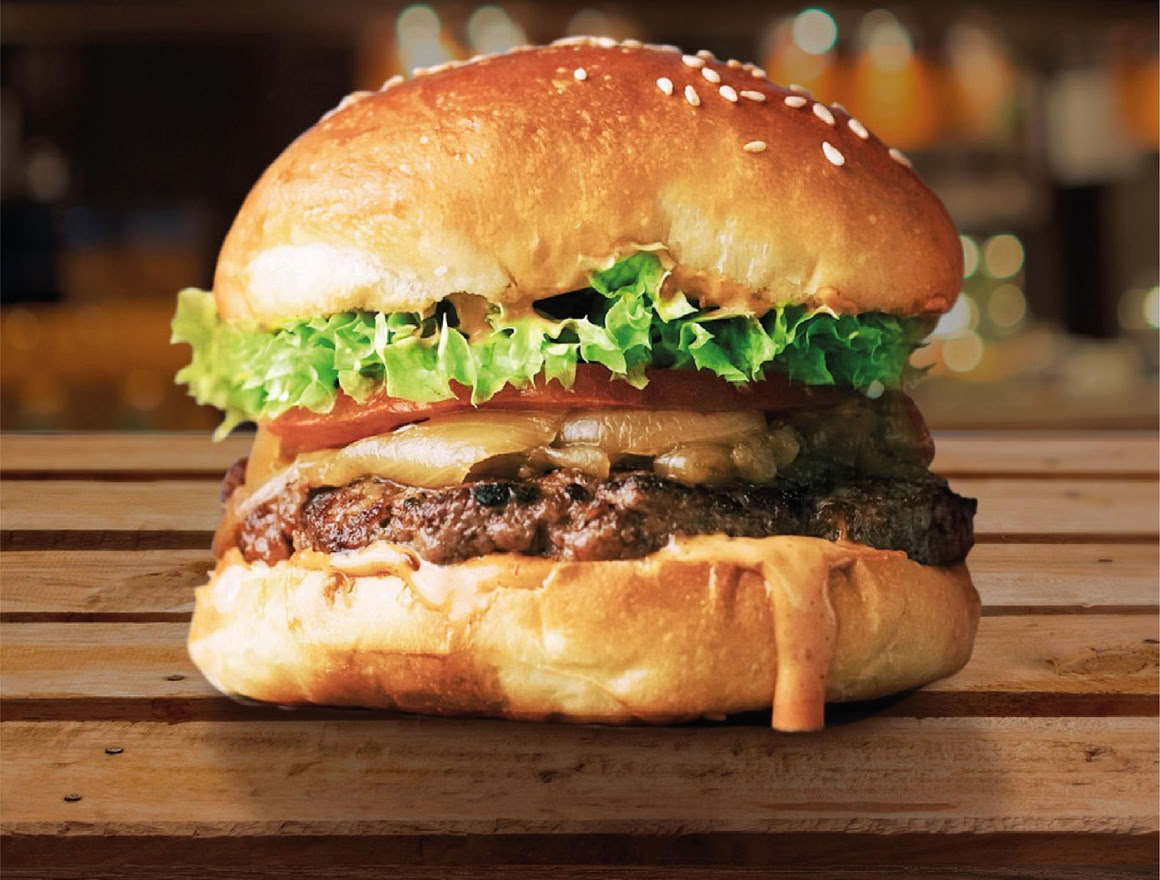
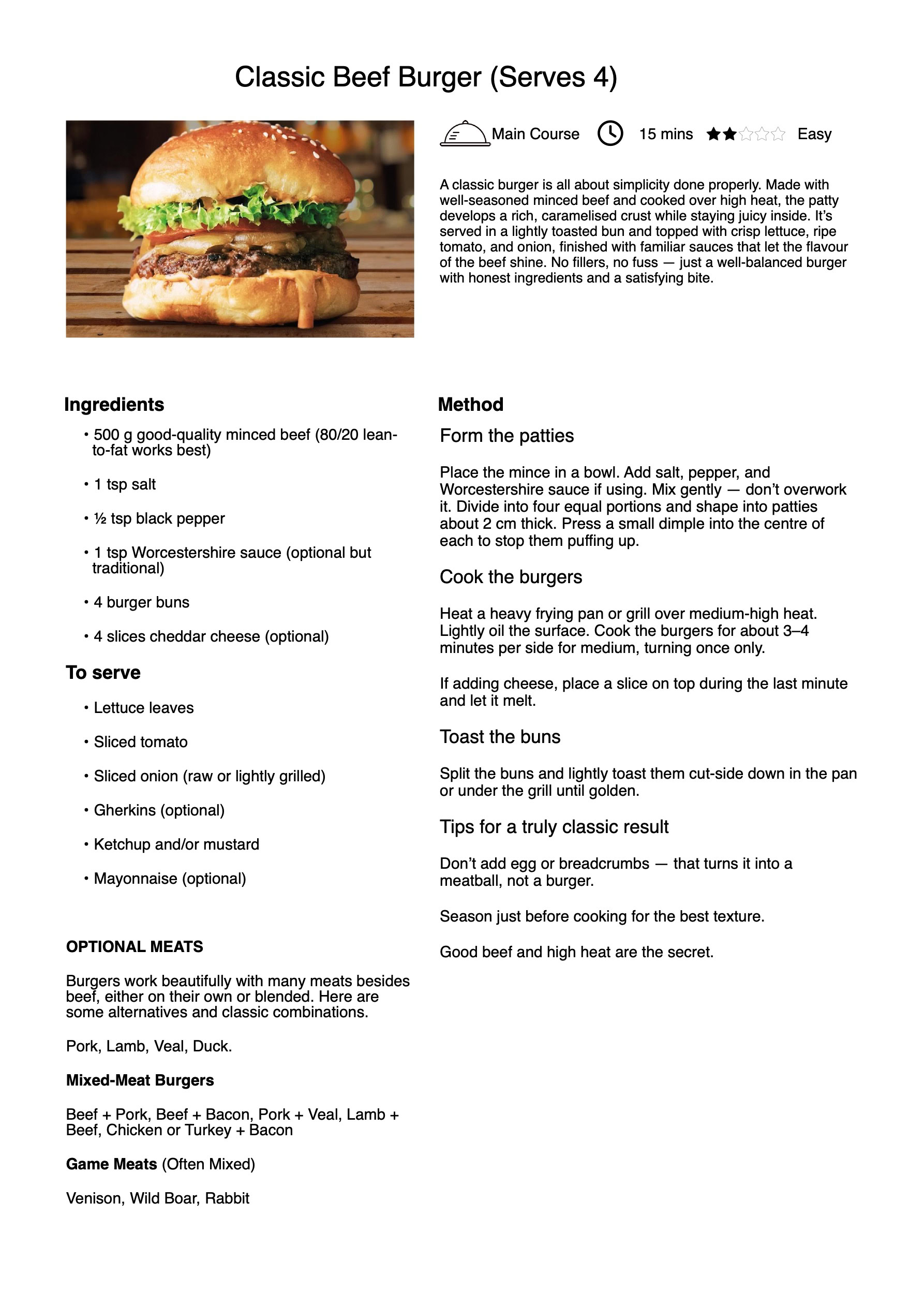
Classic Burger Pattie
A classic burger is all about simplicity done properly. Made with well-seasoned minced beef and cooked over high heat, the patty develops a rich, caramelised crust while staying juicy inside. It’s served in a lightly toasted bun and topped with crisp lettuce, ripe tomato, and onion, finished with familiar sauces that let the flavour of the beef shine. No fillers, no fuss — just a well-balanced burger with honest ingredients and a satisfying bite.
Click to view recipe
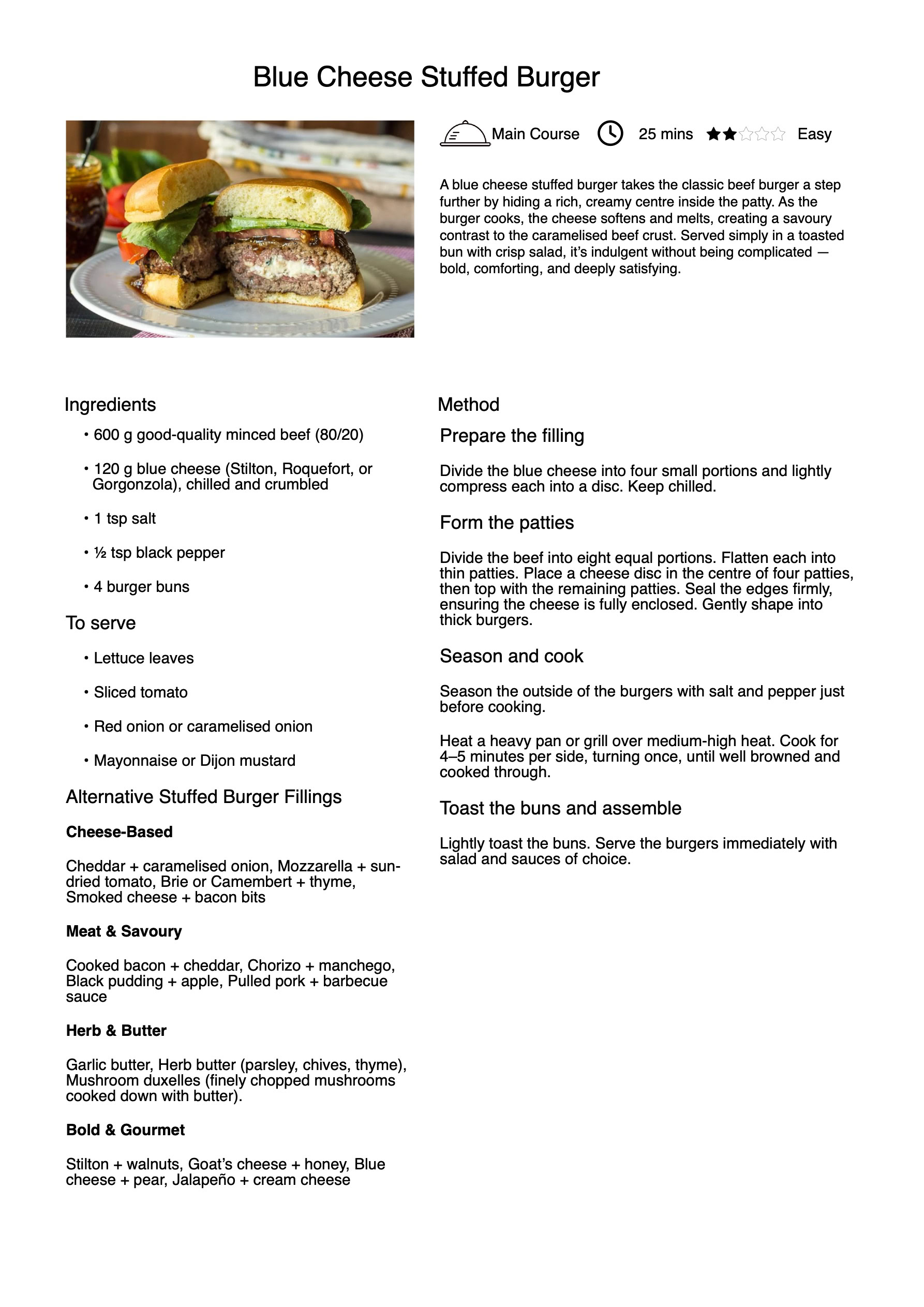
Blue Cheese Stuffed Burger
A blue cheese stuffed burger takes the classic beef burger a step further by hiding a rich, creamy centre inside the patty. As the burger cooks, the cheese softens and melts, creating a savoury contrast to the caramelised beef crust. Served simply in a toasted bun with crisp salad, it’s indulgent without being complicated — bold, comforting, and deeply satisfying.
Click to view recipe
NEWSLETTER SIGN-UP
Sign Me Up